
A Non-Linear Career Path, Engineering Leadership And The Confidence To Say “Go For It”
When people picture a career in engineering, they often imagine a straight line: studying the right subjects, choosing the right degree, and progressing step by step in tech. But the reality is far more varied.
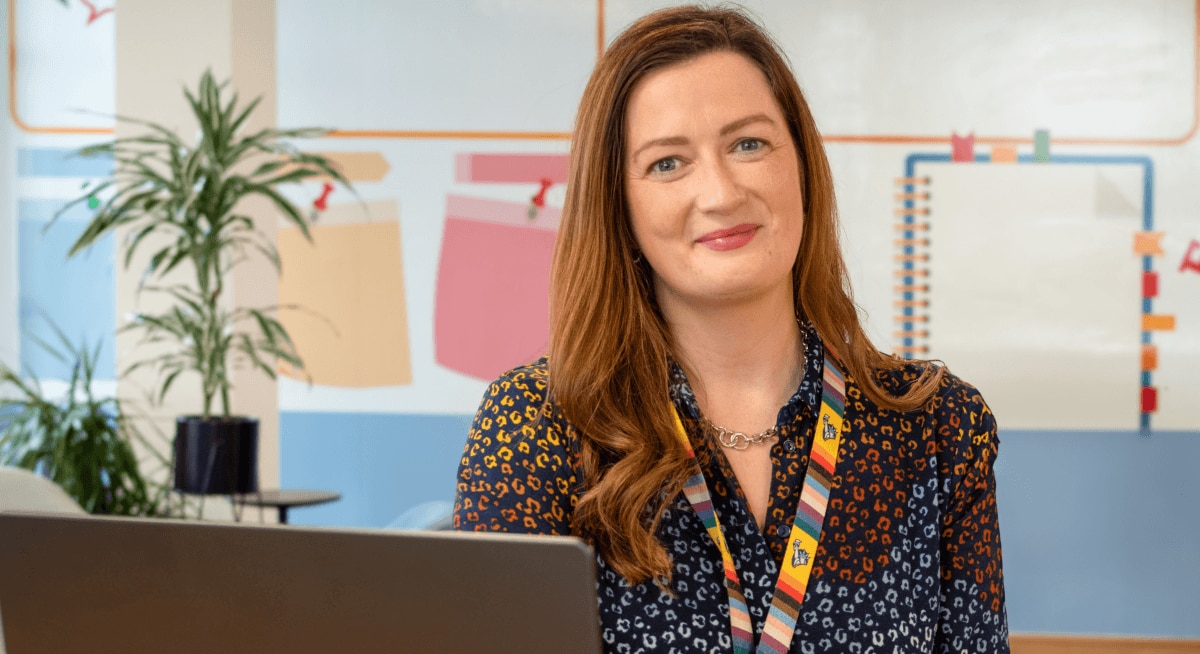
Berni, Engineering Manager at Liberty IT, is proof that a career in tech doesn’t have to follow a traditional route. With a background in music, languages and HR, Berni’s journey into engineering leadership has been shaped by curiosity, learning on the job, and the confidence to take on new challenges, even when self-doubt tried to hold her back.
We spoke to Berni about her non-linear career path, switching careers into engineering, career changes in general, and what she’s learned along the way.
From Languages And Music To Engineering
Berni, engineering wasn’t always on your radar. What first sparked your interest in this career path?
When I was at school, I had never anticipated or even considered that I would have a career in engineering. Now, with the benefit of hindsight, I can appreciate that it was always a potential career path, because I enjoyed studying maths and physics, but didn’t pursue them past secondary education. Instead, I favoured languages and music and opted to continue following those interests.
When I share this background with engineers, they often acknowledge that they have a talent for music or languages, so there is clearly a correlation between these skills and what makes a good engineer! Pattern recognition, problem solving, and creativity - all of those skills translate really well into engineering.
Switching Careers Into Engineering
Your route into tech wasn’t a traditional one. How did you make the move into engineering and technology consulting?
Happenstance! After I left university, I settled into an HR role with Capita HR Solutions, and whilst studying for an MSc in HR management, I moved through various roles, including quality, customer service, process improvement and change management.
Because work varied across multiple customers and contracts, I was happy to remain there and continue to gain experience. Until I saw a role posted by Liberty IT, a process analyst role which sounded strikingly similar to my current role, albeit in a different industry.
I had heard that Liberty IT was a great employer, and when I got the role and started, I found this to be true.
During the past 10 years at Liberty IT, my role and team has evolved greatly, from process improvement analysts, to agile coaches and capability specialists before our most recent evolution to consultants.
This last change truly reflected the nature of the service that this team provided in terms of consultancy across Liberty IT and our parent company, Liberty Mutual Insurance, whether that was product, innovation, technical or business consultancy.
Alongside my day job, I have had a few stretch opportunities to try scrum master and delivery lead roles, which sparked my interest in the transition to the engineering manager career path.
Overcoming Doubt
What were some of the biggest challenges you faced when moving into engineering?
Honestly, the biggest challenge has likely been my own confidence in my ability. Despite being almost 10 years into my professional working life when I joined Liberty IT, I didn’t have a background in IT or engineering, so it felt very much like I starting my career all over again.
For the first five to six years, I introduced myself saying ‘I don’t have a background in IT’, outwardly diminishing my previous professional experience with every fresh interaction. However, I reasoned that I had achieved my background in IT, by pushing myself out of my comfort zone, demonstrating impact and gaining respect from my colleagues, so I actively decided to retire that intro.
That shift made a big difference, it allowed me to focus on what I could bring to the table rather than what I thought I lacked.
Learning on the Job and Closing Skills Gaps
How did you build confidence and capability as you moved into engineering leadership?
A lot of it came from learning on the job and taking on stretch opportunities. Alongside my core role, I had chances to step into scrum master and delivery lead positions, which helped me understand engineering teams more deeply and confirmed that this was the direction I wanted to go.
I’ve always believed in identifying development gaps and then actively working to close those gaps, whether that’s through mentoring, feedback, formal learning or simply saying yes to opportunities that feel uncomfortable at first. That mindset of continuous learning has been critical for me, especially in a fast-changing tech environment.
The Role of Mentorship and Support
How important has mentoring and development been throughout your career?
It’s been incredibly important. Without naming anyone in particular, I’m really lucky to have had a few exceptional managers and mentors in my career who have been really influential. On reflection, they have shared similar attributes and as a consequence I try to emulate those attributes in my behaviour and interactions with others, both as a manager and a peer, so that I can have a similar impact.
I consider them influential because they have been active listeners, direct but caring with feedback, encouraging and most significantly of all, they have been genuinely supportive and empathetic in how they have valued both my professional growth and personal wellbeing.
Engineering Leadership Beyond Coding
What do you enjoy most about your role today?
I really enjoy the diversity of my job and how it varies day to day. My focus could be one-to-ones, my own personal development, stakeholder management, ways of working or working directly with engineers. I’m currently working with two engineering teams within Investments.
Working with and being responsible for supporting talented engineers is a privilege. I enjoy encouraging individuals to self-reflect on what is going well and celebrating those successes. As well as identifying opportunities or development areas, then working to address those.
Continuous improvement applies to everyone, that’s where engineering leadership really comes to life for me. It’s also a good reminder that there are many tech roles beyond coding, roles where problem solving, communication and people skills are just as critical as technical knowledge.
Advice for Anyone Considering a Career Change into Tech
What advice would you give to someone thinking about switching careers into engineering or tech?
Don’t hesitate. Go for it, and take all of the opportunities that come with it. You don’t need to have a perfectly mapped-out plan or a traditional background. Focus on your transferable skills, identify where you need to grow, and look for environments that support learning, mentoring and development.
Tech is an every growing industries, that needs people with diverse experiences and perspectives. A non-linear career path isn’t a disadvantage; it can be a real strength.
There’s More Than One Way In
Berni’s story is a powerful reminder that there’s no single path into tech. Whether you’re early in your career, exploring new directions, or changing careers later in life, what matters most is curiosity, resilience and the willingness to keep learning.
Stories like Berni’s sit alongside many others at Liberty IT, from solicitors and performers to scientists turned engineers, all connected by curiosity, continuous learning and the confidence to try something new.
At Liberty IT, we believe great careers are built through opportunity, support and continuous growth. If you’re considering a career change into tech, interested in engineering leadership, or curious about roles that combine technology, problem-solving solving and people skills, explore our careers at Liberty IT and discover how your own path could unfold.

Come work with us
Join us and be part of a collaborative team working with amazing technologies, delivering innovative solutions worldwide. We're currently hiring Software Engineers and more.


